College Costs Keep Rising. Disaggregated Data Show the Asian American and Hispanic or Latino Students who Face the Greatest Affordability Gaps
Published Sep 12, 2025
As another academic year begins, students and families are grappling with enduring affordability challenges. According to Sallie Mae’s 2025 “How America Pays for College” report, the average American family spent $30,837 on higher education last year, up 9 percent from the prior year. For many students from historically underrepresented backgrounds, affordability concerns are not new. Generations of Asian American and Hispanic or Latino students have faced unmet need—the gap between what families can afford and what students must pay—that persists long after arriving in the United States. When broad averages mask differences within these groups, policymakers and researchers risk missing the nuances that shape who enrolls, persists, and completes.
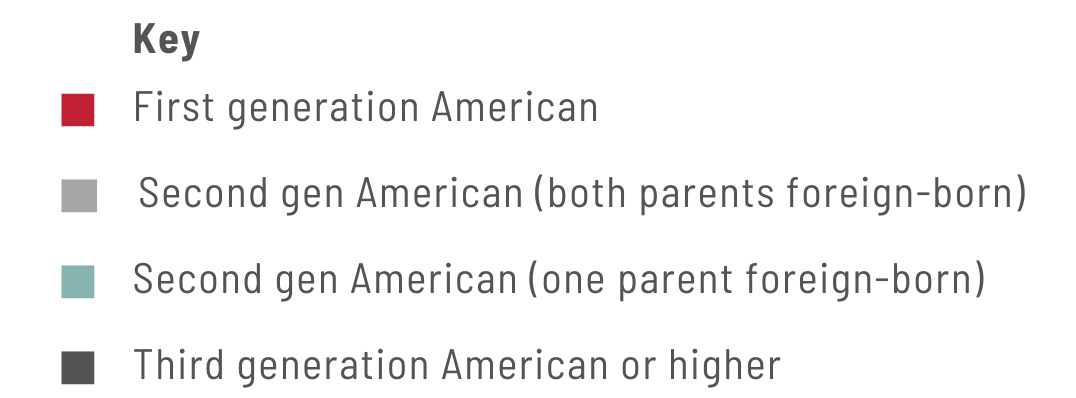 This analysis uses detailed data to explore unmet need among Asian American and Hispanic or Latino diaspora students based on their country of descent, ethnic heritage, and generational status. We examined three groups: students born outside the United States (first-generation American); U.S.-born students with one or two foreign-born parents (second generation American); and U.S.- or foreign-born students with U.S.-born parents (third generation or higher). The additional disaggregation illuminates wide-ranging cultural, socioeconomic, and educational differences that shape the college experiences and financial realities within these communities.
How Does Unmet Need Vary Among Asian American and Hispanic or Latino Diaspora Students?
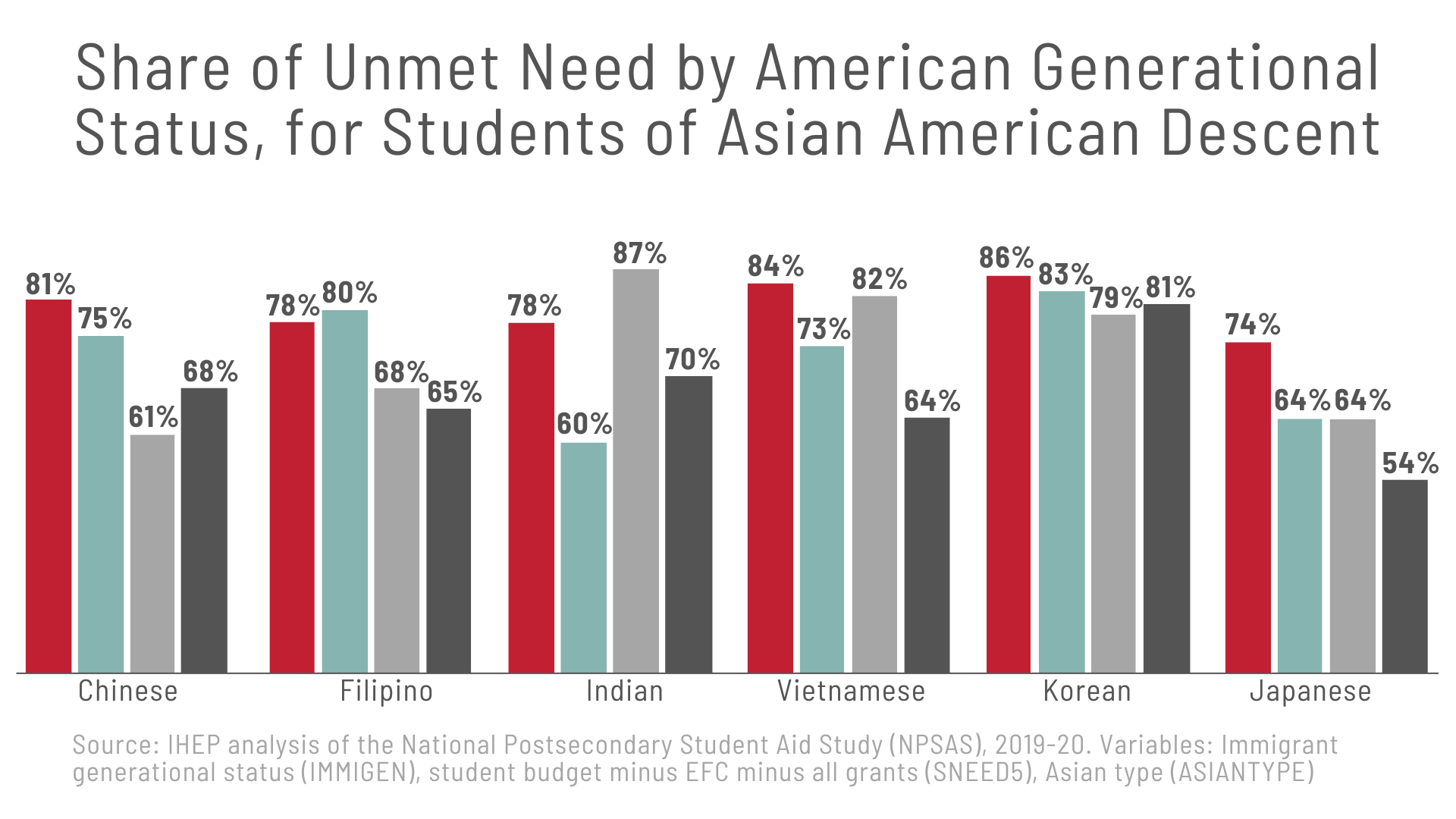
Notable differences in unmet need emerge based on American generational status and country of descent among Asian American students. For instance, third-generation Korean American students report unmet need at the same rate as first-generation Chinese American students (81 percent). Other third generation American students report unmet need at rates ranging from 54 to 70 percent.
For Japanese students, unmet need decreases steadily across generations. These students also generally experience lower rates of unmet need compared to other Asian American students within the same generation. These trends highlight the varied experiences within Asian American diaspora populations and suggest factors like wealth patterns and previous education experiences may influence differences in unmet need.
Disaggregating outcomes within the broad Hispanic or Latino diaspora reveals notable variations in unmet need based on country of descent, American generational status, and ethnic identity. Nearly all first-generation Cuban American students (95 percent) face unmet need, with this figure decreasing to 72 percent among second-generation Cuban American students with both parents foreign-born. Second-generation Cuban American students with one foreign-born parent have a much lower unmet need, with only 53 percent reporting financial gaps. In contrast, Mexican, Mexican American, and Chicano students—distinct ethnic identities within the same country of descent—experience persistently high unmet need across generations.
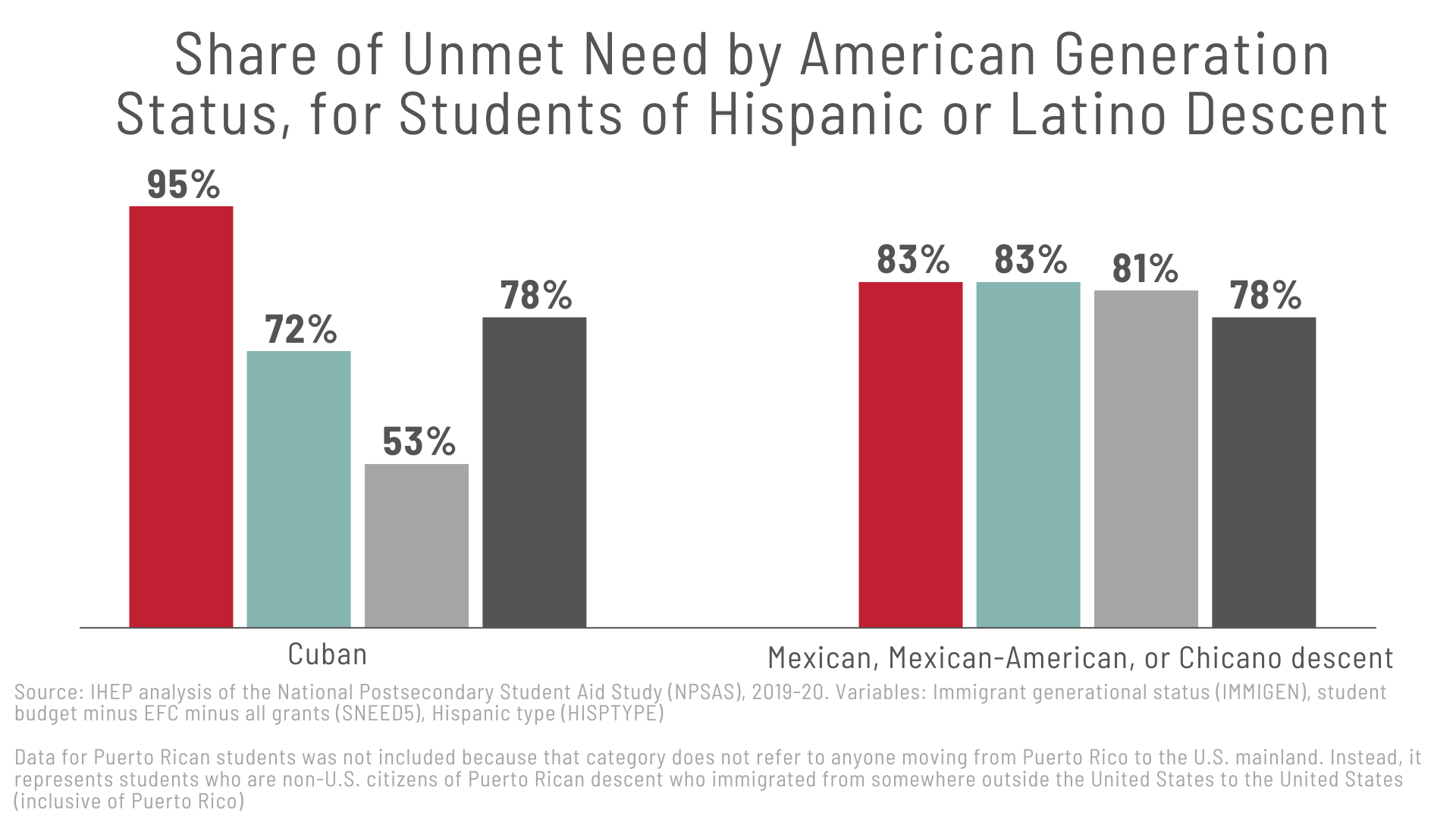
This analysis excludes data on some subgroups of Hispanic or Latino students, due to data collection and sample size limitations. Expanding data collection to include students from the Caribbean, or Central American or South American countries would illuminate unmet need complexities within the Hispanic or Latino population.
Utilizing the Power of Disaggregated Data to Boost College Affordability
Disaggregated data within and across racial and ethnic groups can uncover patterns that broader categories can obscure. These insights are essential for understanding how students navigate college affordability, and for unlocking higher education’s full potential as a driver of economic mobility.
But detailed data alone is not enough. Policymakers and college leaders must act on these insights to reduce unmet need and increase college affordability for all students. Federal and state investments should prioritize:
- Protecting and increasing the federal Pell Grant, ensuring it covers a greater share of college costs
- Supporting first-dollar free college programs to cover living expenses like food, housing, childcare, and transportation
- Improving targeted outreach and financial aid transparency to raise awareness of widely accessible grants or other financial aid opportunities
- Strengthening federal and state data systems to allow policymakers to see and address affordability gaps across different groups of students
Without intentional policy design, unmet need will continue to limit affordability and opportunity for too many students across Asian American and Hispanic or Latino diasporas for generations to come. With the right investments, policymakers can ensure the promise of higher education is within reach for every student.